HBsAg may persist in chronic HBV patients beyond seroclearance

By Shreeya Nanda, Senior medwireNews Reporter

The use of a highly sensitive assay for the detection of hepatitis B surface antigen (HBsAg) suggests that HBsAg negativity as evaluated by the conventional test may not be indicative of seroclearance in patients with chronic hepatitis B virus (HBV) infection.

The study authors explain that the highly sensitive assay, which couples a chemiluminescent enzyme immunoassay with an immune complex transfer method, is 100 times more sensitive than the conventional assay, with respective lower limits of detection of 0.5 mIU/mL and 50.0 mIU/mL.

Among 109 chronic HBV patients, the rate of HBsAg positivity as assessed by the highly sensitive assay was 80.7% at baseline (ie, the date of so-called conventional HBsAg seroclearance) and 55.0% at 6–12 months. And at 3–5 years from baseline, the highly sensitive test detected HBsAg in 21.3% of the 94 patients with available follow-up data.

Man-Fung Yuen, from the University of Hong Kong, and co-workers believe that the assay could be useful for differentiating chronic HBV patients with HBsAg seroclearance as detected by conventional methods from individuals previously exposed to HBV but who are not carriers. They add that it is important to identify the former group because of the continued risk of hepatocellular carcinoma as well as HBV transmission and reactivation.

Serum anti-HBsAg antibodies (anti-HBs) were detected in 11.1% of study participants at baseline and in half the patients after 3 to 5 years.

A comparison of patients positive for anti-HBs at one or more timepoints with those persistently negative showed a significant difference in the detectability of the highly sensitive HBsAg test at 6–12 months and 3–5 years, at 44.4% versus 72.5% (p=0.007) and 7.4% versus 40.0% (p<0.001), respectively.

The low detection rate among patients positive for anti-HBs suggests that additional markers, such as hepatitis B core-related antigen, or the improved detection of HBV DNA, for instance via ultracentrifugation, would “likely be needed for the identification of [chronic HBV] after conventional HBsAg seroclearance”, say the researchers.

They also found a significant difference in the rate of anti-HB–positivity at 3–5 years between patients with genotype B and those with genotype C, at 63.2% versus 41.1% (p=0.036).

“This could imply different HBV genotypes have different risk of reactivation during immunosuppressive therapy with the risk among HBV genotype C possibly higher because of their comparably smaller proportion of anti-HBs positive patients”, Yuen et al conclude in Liver International.

Licensed from medwireNews with permission from Springer Healthcare Ltd. ©Springer Healthcare Ltd. All rights reserved. Neither of these parties endorse or recommend any commercial products, services, or equipment.
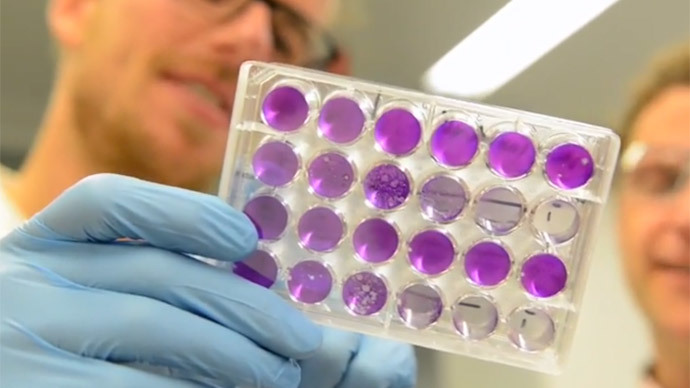
New drug ‘100 percent successful’ in treating previously incurable hepatitis B

New drug ‘100 percent successful’ in treating previously incurable hepatitis B

Screenshot from YouTube user WEHImovies
Australian scientists have used an experimental cancer drug to completely cure hundreds of mice suffering from chronic hepatitis B. The treatment is now being trialed on humans, and could be used to cure diseases like HIV and drug-resistant tuberculosis.

“We were 100 per cent successful in curing HBV (hepatitis B virus) infection in hundreds of tests in preclinical models,” said Marc Pellegrini, who led a team at Melbourne’s Walter and Eliza Hall Institute, Australia’s oldest medical research facility.

The team, whose findingswere published in Proceedings of the National Academy of Sciences (PNAS) journal this week, used birinapant, a US-created cancer drug, which has been trialed on over 350 Americans, but has yet to go on sale.

“Birinapant enabled the destruction of hepatitis B-infected liver cells while leaving normal cells unharmed. Excitingly, when birinapant was administered in combination with current antiviral drug entecavir, the infection was cleared twice as fast compared with birinapant alone. We are hopeful these promising results will be as successful in human clinical trials, which are currently underway in Melbourne, Perth and Adelaide,” said Pellegrini.

According to the World Health Organisation, more than 350 million people are affected by chronic hepatitis B, mostly in developing countries in sub-Saharan Africa and Asia. The disease can cause liver and kidney failure and cancer, and where they are affordable, retroviral drugs have to be taken for the patient’s entire lifetime, or until he or she can be given an organ transplant. More than 700,000 die from it each year.

Pellegrini said the drug restores apoptosis; a biological mechanism that clears damaged cells, which are affected by both, cancer and hepatitis.

“Normally, [healthy] liver cells would respond to infection by switching on a signal that tells the cell to destroy itself ‘for the greater good’, preventing further infection. However our research showed that the virus commandeers the liver cells’ internal communications, telling the cells to ignore the infection and stay alive. Birinapant flips the cell survival ‘switch’ used by the virus, causing the infected cell to die.”

The Australian team believes that targeting the cell, and not the virus itself, is not only more effective, but also avoids the emergence of drug-resistant strains of any virus, which is a growing danger.

“It is relatively easy for an organism to adapt to a drug, but it is very difficult to adapt to a change in the host cell. The virus relies on the survival mechanisms of the host, so if it can’t exploit them, it dies. Such a monumental change in the virus’ environment may be too big a hurdle for it to adapt to.”

Pellegrini believes birinapant and similar medicines could be used to combat numerous other illnesses.

“Pathogens that infect and reside inside host cells, including viral diseases such as HIV, herpes simplex and dengue fever, and bacterial infections such as tuberculosis, could all potentially be cured in a similar way,” he said.

Developed by mid-sized Pennsylvania company Tetralogic, birinapant has been undergoing medical tests since 2009, and is currently undergoing Phase II trials, meaning it is likely still several years away from hitting the shelves.

 Media Contact: Alexandra Peterson apeterson@makovsky.com 212-508-9709  Replicor to present pre-cli

Replicor to present pre-clinical and clinical data on REP 2139-Ca based combination therapy in chronic HBV / HDV co-infection at HEPDART 2015

NEW YORK, December 1, 2015 – Replicor Inc., a privately held biopharmaceutical company targeting a cure for patients with chronic hepatitis B virus (HBV) and chronic HBV and hepatitis delta virus (HDV) co-infection, will present preclinical and clinical data on REP 2139-Ca based combination therapies in HBV monoinfection and HBV / HDV co-infection at the 2015 HEPDART meeting to be held from December 6-10, 2015 in Wailea, Hawaii.  These presentations will be made during the poster session on December 8th.

Poster #114 will present the preclinical assessment of interferon-free combination therapy with REP 2139-Ca and tenofovir disoproxil fumarate (TDF) and entecavir (ETV) to establish control of HBV infection in the liver using the duck model of HBV infection.  In this study, combining REP 2139-Ca with TDF and ETV improved the speed of on-treatment antiviral response and lead to the control of infection in the liver of most ducks including multi-log reductions in liver DHBV DNA and cccDNA and disappearance of duck HBsAg from the liver.

Poster #60 will present the interim efficacy data from the ongoing REP 301 trial (NCT02233075) assessing the safety and efficacy of REP 2139-Ca used in combination with pegylated interferon alpha 2a in Caucasian patients with HBV / HDV co-infection. HBsAg reductions during combined therapy with REP 2139-Ca and pegylated interferon alpha-2a continued to decline, becoming > 6 logs in 4 patients (0.01 IU / ml), > 5 logs in 2 patients, > 3 logs in 2 patients and 0.5-2.78 logs in the remaining 4 patients.  HDV RNA is now currently undetectable in ten patients (~5-8 log reduction from baseline).  The addition of pegylated interferon alpha-2a to therapy was associated with dramatic increases in free anti-HBs (to levels as high as 20,665 mIU / ml) and liver flares, but only in those patients who achieved serum HBsAg < 1 IU / ml (> 4 log reduction from baseline) at the start of immunotherapy.

These pre-clinical and clinical studies continue to advance Replicor’s understanding of how different REP 2139-Ca based combination therapies will benefit patients with HBV infection or HBV / HDV co-infection.

For the HEPDART 2015 meeting and preliminary program:

https://www.informedhorizons.com/hepdart2015/general_information_focus.aspx

About Replicor

Replicor is a privately held biopharmaceutical company with the most advanced animal and human clinical data in the development of the cure for HBV and HDV. The company is dedicated to accelerating the development of an effective treatment for patients with HBV and HBV/HDV infection. For further information about Replicor please visit our website at www.replicor.com.

کلینیک داخلی مسعود (کلینیک تخصصی کبد و گوارش تهران) مرکز مشاوره بیماری های گوارش و کبد

تهران، خیابان کارگر شمالی، بالاتر از بزرگراه جلال آل احمد، خیابان 19، پلاک 144

تلفن : 10-88336300

            88016980-9

کشف جدید داروی هپاتیت ب

معاون تحقیقات و فناوری وزارت بهداشت در گفت‌وگو با «قدس» خبر داد:

بزودی با داروی ایرانی، هپاتیت را ریشه‌کن می‌کنیم

  جامعهگروه/   محمدیپروین- «  بیماریبزودی«هپاتیت»  کرد خواهیم ریشه‌کن کشور در ایرانی، داروی تولید بارا.»

...

  ناقل افراد به توصیه مهم‌ترین افزود: و کرد بیان «قدس» خبرنگار با گفت‌وگو در بهداشت وزارت فناوری و تحقیقات معاون را مطلب این

هپاتیت B و C این است که نگران نباشند، زیرا بزرگ‌ترین مشکل در بیماری هپاتیت نگرانی و اضطراب است.

  ساخت داروی مؤثر هپاتیت در کشور

  ایران و دنیا در هپاتیت درمان مؤثر داروی کشف با خوشبختانه کرد: تصریح ملک‌زاده رضادکتر98  قرص یک مصرف با مبتلا، بیماران درصد

  را «هپاتیت» نزدیک آینده در و کرده درمان را مبتلایان همه داریم که دقیقی برنامه‌ریزی با و می‌کنند پیدا بهبود ماه سه مدتبه

  در شگرفی پیشرفت‌های خوشبختانه داشت: اظهار و پرداخت کشور در هپاتیت وضعیت تشریح به سپس بهداشت پیشینوزیر10  سال

  از نوزادان همه واکسیناسیون با و داشته‌ایمگذشته22  (سال پیش سال72  هپاتیت علیه)B  سال هفت از نوجوانان واکسیناسیون و

  هپاتیت جدید موارد امروزپیش،B  هپاتیت گسترش میزان زیرا می‌بینیم، اندک طور به راB  به اکنون و بود درصد سه زمانی5/1  درصد

(یک میلیون و پانصد هزار نفر) رسیده است.

  هپاتیت درمان برای ایران در که جدیدی داروی با افزود: و کرد اشاره هپاتیت قطعی درمان به بهداشت وزارت فناوری و تحقیقاتمعاونB

تولید شده و در دنیا نیز وجود دارد، می‌توانیم همه بیماران را درمان کنیم و دیگر جای نگرانی نیست.

  هپاتیت درخصوص ملک‌زادهدکترC  هپاتیت مورد در گفت: ما خبرنگار به پاسخ در وC  در شیوع میزان و هستند پاک که داریم کشورهایی

 ( را شیوع میزان کمترین که است  کشورهایی جزو هم خودمان کشور است. درصد نیم از کمتر کشورهااین200  جزو و دارد نفر)هزار

کشورهای پاک به شمار می‌رود که تلاش می‌کنیم همین میزان هم کاهش یابد.

  هپاتیت برای هنوز شد: یادآور بیماری این واکسن درخصوصویC  شده کشف ایران و دنیا در مؤثری داروی ولی نشده، کشف واکسنی

که با استفاده از آن هپاتیت B و C بهبود می‌یابد و تا 98 درصد درمان می‌شود.

  را هپاتیتی بیماران داروهای هزینه بیمه، خوشبختانه کرد: خاطرنشان و داد خبر دارو این برای بیمه پوشش از کبد تخصص فوقاین

پذیرفته و این بیماران را تحت پوشش قرارداده است، بنابراین متقاضیان هپاتیت B و C با داروهای مؤثر و پوشش بیمه درمان می‌شوند.

  ادامه با و کرد خواهیم معالجه را مبتلایان همه اول درجه در داریم که برنامه‌هایی با گفت: و کرد اشاره بهداشت وزارت برنامه‌های بهوی

واکسیناسیون و درمان بیماران هپاتیتی، امیدواریم در آینده نزدیک، هپاتیت را در کشور ریشه‌کن کنیم.

  و افراد همه سوی از بهداشتی موازین رعایت گفت: و کرد تأکید هپاتیت به ابتلا از پیشگیری بر ایران کبد و گوارشی تحقیقات مرکزرئیس

آموزش و ارتقای آگاهی جامعه بهترین روش پیشگیری از ابتلا به این بیماری است.

  بی‌بند از  جلوگیری آلوده، خون با تماس عدم مانند بیماریزا عوامل از پرهیز و هپاتیت انتقال راه‌های با آشنایی کرد: تصریح ملک‌زادهدکتر

  در غیربهداشتی و غیراستاندارد محل‌های در دندانپزشکی و پزشکی خدمات نکردن دریافت و خالکوبی از استفاده عدم باری،و

  انجام برای نیز پزشک به مراجعه البته کند. کمک هپاتیت به مبتلایان آمار کاهش به می‌تواند و است مؤثر هپاتیت به ابتلا ازپیشگیری

آزمایش‌ها برای افراد پرخطر ضروری است.

  و بهنگام درمان و تشخیص که حالی در نیست درستی کار بیماران توسط بیماری کردن پنهان کرد: تأکید کبد و گوارش تخصص فوقاین

  وی، گفته به کنید. مراجعه پزشک به درمان و تشخیص برای بیماری، علایم مشاهده با می‌شود توصیه رو این از است، اثربخشصحیح،

تب، سرماخوردگی، تهوع، استفراغ، درد شکم و زرد شدن سفیدی چشم‌ها از نشانه‌های هپاتیت حاد به شمار می‌رود.

  بیماری پیشرفت با و دارد وجود نیز بدن خارش یا خفیف زردی گاهی است، طولانی خستگی و ضعف هم مزمن هپاتیت نشانهشایع‌ترین

  روش بیماری، نوع این در کنند. مصرف دارو نیاز صورت در و باشند پزشک نظر زیر باید افراد این کند. بروز کبد نارسایی استممکن

تشخیص، آزمایش خون از نظر وجود ویروس هپاتیت B می‌باشد.

محققان با استفاده از نوع خاصی از داروی سرطان موفق به از بین بردن ویروس هپاتیت ب در مدل های بالینی

به گزارش خبرگزاری مهر، محققان استرالیایی موفق به کشف دارویی برای درمان ویروس هپاتیت ب شده اند تا

استرالیایی های مبتلا به این بیماری جزو اولین افرادی باشند که درمان می شوند. این دارو در مدل های بالینی با

موفقیت صد درصدی برای حذف ویروس هپاتیت ب روبرو شده است. هپاتیت ب نوعی بیماری ویروسی در انسان‌

هاست که به کبد بیشترین آسیب را می‌ زند. ویروس این بیماری یکی از جدی‌ ترین انواع هپاتیت را سبب می‌ شود.

اکنون پزشکان امیدوارند تا با آزمایش این دارو بر نمونه های انسانی بتوانند درمان دارویی برای عفونت هپاتیت ب

یافته باشند. این دارو می تواند درمان ویروس هایی نظیر HIV را نیز به دنبال داشته باشد.

در این مطالعه، محققان از ترکیب داروی سرطان Birinapant و داروی ضد ویروسی Entecavir برای از بین

Pellegrini سرپرست این تیم تحقیقاتی می گوید: «آزمایشات اولیه این دارو از دسامبر سال ۲۰۱۴ میلادی آغاز شده

بردن عفونت هپاتیت ب در صدها تست پزشکی و مدل بالینی استفاده کردند. دکتر

و مطالعات بیشتر در این رابطه ادامه دارند.»

کبد برای مقابله با عفونت پیام هایی را ارسال کرده و سلول ها به مبارزه علیه عفونت می پردازند در صورتی که در

مواجه با ویروس هپاتیت ب این ارتباط و هماهنگی از بین رفته و سلول ها به مبارزه با عفونت نمی پردازند. محققان

استرالیایی معتقدند با استفاده از این دارو می توان مانع از قطع این ارتباط شده و سلول ها با قدرت بیشتری به حذف و

از بین بردن عفونت ها می پردازند.

انجمن هپاتیت ب

ملك زاده، دكتر رضا

زمینه فعالیت : پزشك : متخصص داخلی - فوق تخصص گوارش
نشانی : تهران - تهران - بولوار میرداماد - خ. بهروز - ك. دوم - پ. 1/1
تلفن : ۲۲۲۵۸۵۱۲, ۲۲۲۵۲۷۷۴
فاکس : ۲۲۲۵۳۶۳۵
صندوق پستی :

Cancer drug shows promise as cure for hepatitis B

21 April 2015

Dr Marc Pellegrini and Dr Greg Ebert in the laboratory
Dr Marc Pellegrini (L), Dr Greg Ebert and colleagues have
developed a new treatment for chronic hepatitis B infections
that was 100 per cent successful in preclinical trials.

Australian scientists have found a potential cure for hepatitis B virus (HBV) infections, with a promising new treatment proving 100 per cent successful in eliminating the infection in preclinical models.

Australian patients are now the first in the world to have access to the potential treatment – a combination of an antiviral drug and an anti-cancer drug - which is in phase 1/2a clinical trials in Melbourne, Perth and Adelaide.

Scientists from Melbourne’s Walter and Eliza Hall Institute developed the combination treatment using birinapant, a drug developed by US biotech company TetraLogic Pharmaceuticals for treating cancer. Hepatitis B is a chronic viral disease that is currently incurable.

Dr Marc Pellegrini, Dr Greg Ebert and colleagues at the institute used their studies of the behaviour of hepatitis B virus in infected cells as a basis for the treatment. The research was published today in two papers in the journal Proceedings of the National Academy of Sciences.

Dr Pellegrini said the treatment was successful in curing infections in preclinical models, leading to a human trial that began in December 2014. “We were 100 per cent successful in curing HBV infection in hundreds of tests in preclinical models,” Dr Pellegrini said.

“Birinapant enabled the destruction of hepatitis B-infected liver cells while leaving normal cells unharmed. Excitingly, when birinapant was administered in combination with current antiviral drug entecavir, the infection was cleared twice as fast compared with birinapant alone. We are hopeful these promising results will be as successful in human clinical trials, which are currently underway in Melbourne, Perth and Adelaide.”

The combination treatment, developed in collaboration with TetraLogic Pharmaceuticals based in Malvern, Pennsylvania, US, targets the cell signalling pathways that the hepatitis B virus uses to keep host liver cells alive.

Chronic infectious diseases such as HBV live within the host’s cells, enabling them to persist within the body for many months or years, Dr Pellegrini said.

“Normally, liver cells would respond to infection by switching on a signal that tells the cell to destroy itself ‘for the greater good’, preventing further infection,” he said. “However our research showed that the virus commandeers the liver cells’ internal communications, telling the cells to ignore the infection and stay alive. Birinapant flips the cell survival ‘switch’ used by the virus, causing the infected cell to die.”

More than two billion people worldwide are infected with hepatitis B and approximately 400 million have a chronic HBV infection. The virus infects liver cells and can lead to complications including cirrhosis and liver cancer, resulting in more than 780,000 deaths annually.

Treatments that enable the host cell to rid itself of the virus, rather than targeting the virus itself, may prevent drug-resistant strains of HBV emerging, Dr Pellegrini said. “It is relatively easy for an organism to adapt to a drug, but it is very difficult to adapt to a change in the host cell,” he said. “The virus relies on the survival mechanisms of the host, so if it can’t exploit them, it dies. Such a monumental change in the virus’ environment may be too big a hurdle for it to adapt to.”

Dr Pellegrini and colleagues will now investigate if the same strategy could be applied to other chronic infectious diseases. “Pathogens that infect and reside inside host cells, including viral diseases such as HIV, herpes simplex and dengue fever, and bacterial infections such as tuberculosis, could all potentially be cured in a similar way,” he said.

Patients are not currently being recruited for the phase 1/2a clinical trial.

The research was funded by the Australian National Health and Medical Research Council, the Australian Research Council and the Victorian Government.

Read the papers 'Cellular inhibitor of apoptosis proteins prevent clearance of hepatitis B virus' and 'Eliminating hepatitis B by antagonizing cellular inhibitors of apoptosis'.